What to Think About in Custom Driveline Fabrication for Heavy-Duty Trucks: Repair, Balancing, and Rebuild Essentials
Business Name: Anderson Brothers Truck & Equipment
Address: 2640 State Hwy 99 N #1, Eugene, OR 97402
Phone: (541) 688-8686
Anderson Brothers Truck & Equipment
Anderson Brothers Truck & Equipment is a long-established truck parts and repair company located in Eugene, Oregon. Founded in 1949, the business has served the region for more than 70 years, building a reputation as a reliable source for heavy-duty truck parts, custom fabrication, and equipment repair. The company works with commercial vehicle owners, fleets, and equipment operators who need dependable parts and services to keep their trucks operating safely and efficiently.
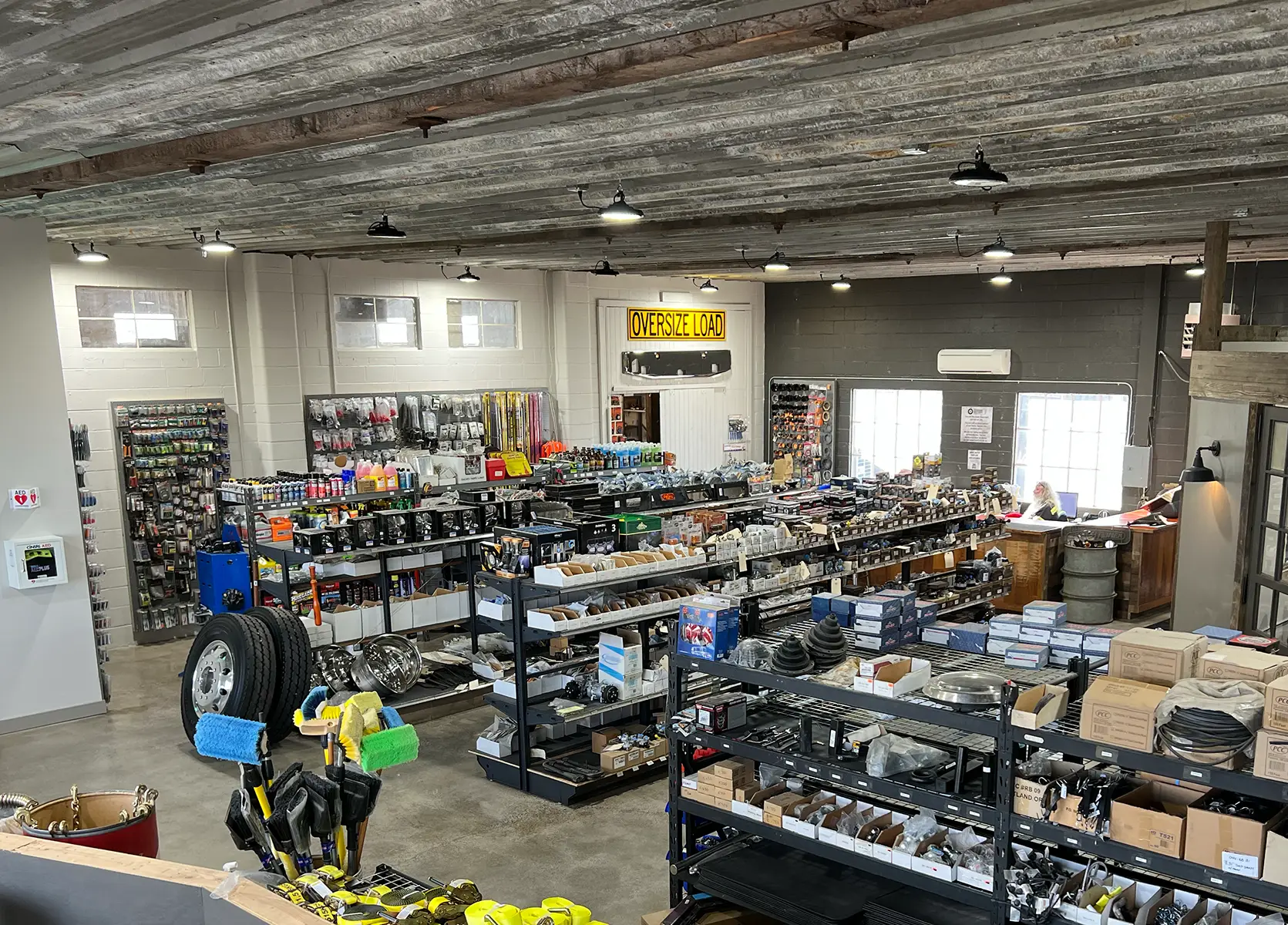
A core focus of Anderson Brothers is providing specialized services for heavy-duty trucks and equipment. Their shop offers custom driveline fabrication and repair, helping customers build, rebuild, or balance drivelines for a wide range of applications. They also specialize in custom U-bolt bending and fabrication, producing precisely sized components for trucks and other heavy equipment. In addition, the company sells both new and used truck parts, stocking a large inventory and offering local delivery in the Eugene and Springfield areas.
Beyond parts sales, Anderson Brothers provides repair and maintenance services for truck components such as transmissions, differentials, and related systems. Their experienced team focuses on delivering practical, cost-effective solutions that help keep trucks and equipment running reliably. With decades of experience and a commitment to local service, Anderson Brothers Truck & Equipment continues to support the trucking and transportation industries throughout Eugene and surrounding communities.
2640 State Hwy 99 N #1, Eugene, OR 97402
Business Hours
Heavy-duty trucks reside in a world of shock loads, high grades, payload spikes, and long hours at constant speed. The driveline sits at the center of that punishment. When it is right, the truck feels planted, predictable, and quiet even under torque. When it is incorrect, the shake travels from the floorboard to the mirror stalks, U-joints scar themselves to death, and equipments begin to chatter. Getting a custom driveline developed or fixed is not a luxury item for program trucks. It is core reliability work, the sort of attention that keeps a fleet's cost per mile within forecast and prevents roadside drivelines calls that occur at the worst time.
This is a trade where numbers matter as much as the torch. I have actually watched experienced producers tack, check, and fix a shaft three times simply to claw back a couple of thousandths of runout, because they knew that sloppiness here shows up later on at 65 miles per hour as heat in a cheap carrier bearing. The details pay off.
Start with the problem, not the parts
It is tempting to leap to new yokes and thicker tube, but the best custom driveline work begins with a clear medical diagnosis. Not all vibrations indicate the exact same fix. A rumble that rises with road speed frequently traces to shaft balance, tire or wheel issues, or a bent tube. A pulsing under heavy throttle at low speed can be U-joint brinelling, worn slip splines, or a bad carrier bearing. A harmonic that peaks near a particular highway speed mean a vital speed problem. Getting orientation from those patterns conserves money and steers every choice that follows, from tube size to joint series to whether you split a long single shaft into a two-piece with a midship bearing.
I keep notes from test drives. Develop the routine of logging when the vibration appears, what gear, throttle position, speed, and whether it fades throughout coast or grows under load. That page becomes your develop specification as much as any measurement.
Measure for fitment like it is aerospace
A sturdy shaft that is the incorrect length, or the right length with the incorrect operating angle, is still a failure. Set trip height initially, with the truck as it will live when working. Air suspensions need to be at normal driving height. Raised leaf trucks ought to have pinion angle set where it belongs, locked down with appropriate hardware. This is where Custom U Bolts show up in the real world. If you use shims under leaf springs to fix pinion angle, those shims alter the stack height, and you need longer U bolts with complete thread engagement and proper torque. Careless securing lets the axle turn under load, which eliminates U-joints and splines.
For measurements, be exact and constant. Tail housing flange to pinion flange is the common standard, but blended flange patterns or half-round yokes alter how you measure and what adapters you might require. Keep in mind pilot diameters, bolt circle diameters, and spline count at the slip. On heavy trucks I still see 3 separate yoke sizes on the exact same lorry: 1710 at the transmission, 1760 midship, and 1810 at the axle. Blending these accidentally complicates balance and service.
A few key figures direct length: go for mid-travel at the slip when the truck sits at trip height. Leave enough plunge for complete suspension compression without bottoming, and enough extension for droop without shaft pullout. On long wheelbase tandems, that can be an inch or more each method, depending on geometry. Mark phasing before teardown. On two-piece shafts, the front and back must be timed correctly to cancel speed variations. If the truck got here with a misphased shaft, do not copy the error. Appropriate it.
Here is a compact checklist I utilize before committing to tube size or yokes:
- Driveline length at ride height and at full bump and droop
- Flange types, pilot sizes, bolt circle, and U-joint series at each end
- Operating angles at transmission output, provider bearing, and pinion, within 0.5 degree match where required
- Slip spline travel available vs needed, including seal land and stop-to-stop distances
- Frame mounting points and rigidity for any carrier bearing or midship support
Materials and tube sizing are torque mathematics, not guesswork
Most durable drivelines use DOM steel tube, typically 1020 or 1026. Wall thickness normally falls in between 0.120 and 0.188 inch, with outside sizes of 3.5 to 6 inches depending on torque and length. Chromoly, like 4130, appears in serious task or high rpm environments but is not typical in vocational trucks since the expense hardly ever buys proportional benefit for the rpm variety. Aluminum shafts have weight advantages, however in heavy service they can trade damage resistance and long-lasting sturdiness for a weight number that does not change profits. For most fleets, stout steel pages the bills.
Bigger tube increases bending stiffness and raises critical speed, however it alters clearance to crossmembers, exhaust, and brake pipes. On a long shaft, the action from 4 inch to 5 inch OD can move a crucial speed from roughly 2,800 rpm to 3,400 rpm, a cushion you will feel at highway cruise. Those are ballpark figures, not a substitute for computation. If you are within a couple of hundred rpm of your cruise shaft speed, do not bet. Change the tube, split the shaft with a carrier, or change ratio if your usage case allows it.
Weld yokes and midship stubs should match the tube size and wall so the weld joint has even heat input and uniform strength. You want a clean V-groove, constant feed, and full penetration without burn-through shoulders. Many shops will pre-heat much heavier areas and finish with an aligning pass before balance. A driveline that looks straight to the eye can still show 0.020 inch overall showed runout. The target is usually under 0.010 inch TIR on the tube and 0.004 to 0.006 at the weld shoulders for sturdy shafts. The straighter it is, the less weight you will be stacking throughout balance.
U-joint series, yokes, and phasing matter like gear choice
Pick U-joint series based on torque and joint angle, not what was on the rack. Common heavy-duty series consist of 1710, 1760, 1810, and 1880. Capacity differs with operating angle and lubrication, but as a rough guide, moving from 1710 to 1810 is a significant dive in torque ranking and cap size. Full-round yokes with bolted bearing caps hold much better under shock than strap-style half-rounds, and they tolerate re-torque cycles better. Do not mix strap bolts throughout brand names. Bolt length, shoulder, and thread pitch differ, and the wrong bolt offers an incorrect sense of clamp. The majority of 1710 to 1810 cap bolts land in the 70 to 120 lb-ft torque range. Constantly verify from the yoke maker's spec sheet.
Phasing is non-negotiable. The front and rear joints on a single shaft need to sit on the same airplane. If one ear is clocked a couple of degrees out, the shaft introduces a second-order vibration that balance can not fix. On two-piece systems, the phasing changes in foreseeable methods to cancel speed ripple throughout the provider. If you are not particular, set the assistance angles, then search for the appropriate clocking for the particular plan. A wrong guess shows up on the very first test drive.
Angles, carrier bearings, and why one degree can matter
U-joints like to move. A joint that runs at precisely zero degrees never turns its needles, which chews flats in the bearings, then grows vibration under light load. Go for 1 to 3 degrees of operating angle at each joint on a single shaft, with the transmission output and pinion angles equal and opposite within roughly half a degree. That range keeps the needles alive without producing a big sine-wave in speed.
Two-piece shafts follow comparable logic however include the provider. Set the provider bracket so that the front and rear sections each live in a comfortable angle window. Try to keep the front shaft short and stiff to push critical speed greater. On long wheelbase tractors, splitting the overall length into a front shaft around 40 inches and a back that suits the axle spacing typically keeps both within safe rpm.
Carrier bearings deserve real mounting. A soft or cracked rubber assistance, a bent bracket, or a frame crossmember that can bend under load will appear as oscillation that ruins a cautious balance job. Mount the carrier on clean, flat steel, and shim to set height instead of slotting holes. If you adjust height, reconsider angles at every joint.
Balancing and important speed: understand your numbers
A sturdy shaft should be dynamically stabilized at a speed that represents how it will live. Shops differ in technique, however balancing at or above the shaft's anticipated highway rpm gives the very best read. Adding weights to strike absolutely no is not the objective if television or yokes are not directly. Correct gross runout first, then balance. A common heavy truck shaft can be stabilized to a recurring level in the neighborhood of a couple of gram-inches, often tighter on much shorter, stiffer pieces. If a store has to stack a handful of slugs around the area, you likely missed a correcting the alignment of step.
Critical speed is the rpm where the shaft's first bending mode gets thrilled. Long, thin shafts hit it at remarkably low speeds. Here is a useful way to consider it. Expect a tandem dump uses a single rear shaft measuring about 72 inches of exposed tube, 5 inch OD, 0.125 wall. That shaft's very first critical may relax 3,000 to 3,200 rpm depending upon end restrictions and product. With 4.10 equipments and 11R22.5 tires, shaft rpm at 65 miles per hour could be approximately 2,700 to 2,900 rpm. That margin is narrow. Hit a downhill at 72 miles per hour and you might kiss the mode, feel a buzz, and watch carrier life shrink. Dividing into a two-piece with a midship bearing raises the important speeds and smooths the cabin. You pay in added parts and a little upkeep, however for long wheelbase trucks it is the wise trade.
Repair and rebuild: when to conserve and when to start fresh
A damaged shaft is not constantly a total loss. You can true a bent tube, though the success window closes if it has a deep damage, a kink, or extreme rust pitting. Welded yokes with stretched strap threads or worrying on the cap tires deserve replacement. Slip splines with visible wear, looseness under torsion, or galling at the seal land ought to be replaced as a set, male and woman. Construct a fresh balance standard with new components instead of chasing after a compromise.
U-joints provide a clear choice. Greaseable joints buy you examination and purge capability, at the cost of slightly smaller random sample and the danger that somebody over-pressurizes a seal and drives grit within. Sealed, non-greaseable joints offer higher fixed strength and much better sealing for fleets that do not trust grease schedules. I have actually spec 'd sealed joints for winter season salt states where salt water consumes whatever, but I am rigorous about evaluation intervals.
Heat marks on the cross, bad cap fits, and brinelled needles justify replacement. Resist the routine of switching simply one joint in a two-joint shaft that has actually been knocking for months. If one is gone, the other has actually lived through the exact same misalignment or absence of lube.
A field story about angles and hardware
We had an employment International can be found in with a deep throttle vibration after a spring shop raised the rear an inch to level the truck. They set up pinion shims however recycled old U bolts. Within weeks, the axle turned under load, pressing the pinion angle out by roughly 3 degrees. The truck consumed two rear U-joints and a provider bearing in less than 10,000 miles. The fix was simple, not cheap. We reset the angles, installed fresh Custom U Bolts sized for the taller stack, and changed the rear shaft with a 5 inch tube to get a little more headroom on vital speed. Quiet since. The lesson repeats: you do not set angles as soon as and forget them. You lock them down with proper clamping force and proper hardware, then you recheck after the first thousand miles.
Fasteners, torque, and the small things that keep big parts alive
Every excellent driveline is backed by great bolts. For strap yokes, constantly utilize the specified strap and matched bolts. For full-round yokes, clean the threads, apply the manufacturer-approved threadlocker if called for, and torque in a criss-cross pattern. Painted yokes may look neat, however paint between cap and yoke ear is a creep path. Strip paint where parts seat.
Flange bolts are another trap. Different flanges require various lengths, shoulder sizes, and thread pitches. Mixing a metric bolt in an inch-thread yoke due to the fact that it felt close is a quick way to remove a bore at roadside. Keep identified bins and match by part number, not eyeball. It seems like fundamental shopkeeping due to the fact that it is, and it avoids rework.
Shop workflow that respects cause and effect
When we develop or rebuild a heavy-duty shaft, we follow a repeatable, tight procedure. The order matters, because each action feeds the next and prevents compensating for earlier mistakes.
- Inspect and step at ride height, record angles, and mark phasing. Identify the original complaint.
- Choose tube size, yokes, and U-joint series for torque, length, and vital speed margins.
- Fit, tack, and real on the bench, fixing runout with a dial indicator before final weld.
- Straighten as required, then dynamically balance at or near anticipated operating rpm.
- Install with proper hardware, set carrier height and pinion angle, torque fasteners, and roadway test under load.
That 5th step gets skipped more than people confess. A quick loop around the block is not a test. Discover a route where you can strike the speeds and loads that produced the initial problem. Use a known-good stretch of road. If you remain in a fleet with vibration analysis tools, this is where they earn their keep.
Two-piece shafts, double cardans, and PTOs
A long, low-angle two-piece shaft with a midship bearing resolves most long wheelbase problems, but the layout matters. You want the geometry such that each joint works within that friendly 1 to 3 degree window. Sometimes product packaging forces a compromise. If your front shaft would sit near absolutely no degrees, you can angle the carrier slightly to wake the front joint, then counter that angle in the rear geometry to keep the entire system pleased. When area is tight at the transmission, a compact slip near the midship rather than at the transmission can buy clearance.
Double cardan joints, typically called CVs, show up where angle is high at one end. They can perform at bigger angles more efficiently than a single joint, but they are not a cure-all. They add length and cost, and they focus wear in more parts. Use them when you need to clear crossmembers, PTOs, or nonstandard trip heights, and make certain the rest of the shaft is sized to match the torque they will see.
PTO shafts bring their own dangers. They see high angles at low engine speed throughout work cycles where the operator is focused on hydraulics, not the truck. I have actually seen PTO shafts with perfect balance still fail due to the fact that the operator let them chatter at high angle for hours feeding a pump. Specification the joint series up a notch for PTO responsibility if the angle is steep, and educate the team about rpm and angle limits.
Maintenance that in fact avoids failure
Grease schedules drift in the real life. Set intervals in miles or hours and anchor them to the heaviest service in your fleet, not the lightest. For a lot of heavy trucks with greaseable joints, a 5,000 to 10,000 mile period works if the environment is tidy. In mines, on salted winter roads, or in off-road logging, reduce that to 2,500 miles or perhaps weekly. Use an NLGI 2 lithium complex grease that matches your temperature variety. At the slip, add grease until you see fresh product at the seal, then stop. If the slip has a purge plug, fracture it while greasing and retighten after fresh grease presses through. Over-greasing can blow seals and trap grit.
Carrier bearings deserve a feel test. Spin them by hand during service. Any roughness, sound, or axial play is a caution. The rubber support must look uncracked and firm. A sagging assistance modifications angles enough to introduce vibration that consumes joints downstream.
Inspect straps, cap bolts, and flanges for witness marks and looseness. A glossy ring under a cap bolt head is an idea that torque fell off. Replace bolts that have actually been heat-stretched or necked down. Keep extra Truck Parts on hand, from common U-joint packages to straps and flange bolts, so you do not jeopardize with the wrong hardware under time pressure.
Cost, downtime, and when to upsize now to conserve later
A straightforward durable rebuild with new U-joints and a balance may land in the 400 to 700 dollar variety depending on series and shop rates. Include a new slip spline and yokes, and you are most likely in the 800 to 1,500 dollar window. A two-piece conversion with a new carrier, brackets, and both shafts can run higher. These are genuine dollars, but so is a tow and a missed out on delivery. If the initial shaft lived near its limitations on tube OD, joint series, or critical speed, invest the extra to upsize now. I track comebacks. Almost whenever someone tried to save a couple of hundred bucks by keeping marginal tube on a long shaft, we saw the truck once again for a balance renovate or a carrier swap within months.
Installation subtlety that prevents do-overs
Before the new or rebuilt shaft goes in, clean up the flange faces. Rust and paint flake will squash under torque and relax the joint. Center the shaft on pilots instead of requiring bolts to center it. On half-round yokes, seat the caps squarely, tap them with a brass drift to settle the needles, then torque gradually in sequence. Rotate the shaft after each cap to feel for binding. If a cap binds, pull it back apart and examine that all needles remained upright. Just one needle tipped on its side will feel great in the shop and stop working in service.
Set the carrier height using shims rather than prying on slotted holes. Confirm that the rubber is not pre-loaded into a twist. Recheck operating angles at trip height, and tape-record them. Those numbers become your baseline when somebody brings the truck back three months later on with a new vibration. Now you can see if a spring settled or a bushing failed.
A short note on suspension, pinion angle, and Custom U Bolts
Suspension work and driveline work are married. If you lift or level a leaf-spring truck, fix the pinion angle with appropriate shims and lock it down with Custom U Bolts cut to the appropriate length, not recycled hardware with over-stretched threads. Torque them in phases, cross-pattern, and retorque after the very first 100 to 200 miles. Axle wrap under torque is not simply a traction issue. It is a U-joint killer. Proper securing keeps the angles you determined in the store alive on the road.
Safety and test validation
Use rated stands and chocks when you are under a truck performing at speed on a chassis dyno. Loose clothing and spinning shafts do not blend. On road tests, select paths where you can hold consistent speeds. If you have access to a tri-axial accelerometer or a simple phone-based vibration app mounted safely, log a standard. A light, sharp vibration increasing with speed points to balance. A slow, heavy thump under velocity points toward joint or angle. If you can not reproduce the grievance, do not restore the truck and hope. Confirm under the conditions the driver actually sees.
The bottom line for dependable drivelines
Custom driveline fabrication is equivalent parts measurement discipline, component option, and attention to small tolerances that compound at speed. If you set angles within a tight window, choice U-joint series that truthfully fit torque and angle, size tube to stay well clear of important speed, and balance at representative rpm, the truck will feel settled. Pair that with the right fasteners, from flange bolts to Custom U Bolts where suspension work touches pinion angle, and you prevent the sluggish creep of issues that become huge invoices.
When you do it right, the result is not remarkable. The mirrors stop shaking, the floorboard goes peaceful, and the motorist stops thinking of the driveline totally. That is the objective. In a heavy truck, no news from the shaft is great news.
Anderson Brothers Truck & Equipment is located in Eugene, Oregon
Anderson Brothers Truck & Equipment was founded in 1949
Anderson Brothers Truck & Equipment serves commercial truck owners
Anderson Brothers Truck & Equipment serves fleet operators
Anderson Brothers Truck & Equipment provides heavy-duty truck parts
Anderson Brothers Truck & Equipment provides truck equipment repair services
Anderson Brothers Truck & Equipment specializes in driveline fabrication
Anderson Brothers Truck & Equipment performs driveline repair
Anderson Brothers Truck & Equipment offers custom U-bolt bending
Anderson Brothers Truck & Equipment manufactures custom U-bolts
Anderson Brothers Truck & Equipment sells new truck parts
Anderson Brothers Truck & Equipment sells used truck parts
Anderson Brothers Truck & Equipment maintains heavy-duty trucks
Anderson Brothers Truck & Equipment repairs truck transmissions
Anderson Brothers Truck & Equipment repairs truck differentials
Anderson Brothers Truck & Equipment supports the trucking industry
Anderson Brothers Truck & Equipment operates in Lane County, Oregon
Anderson Brothers Truck & Equipment provides parts delivery services
Anderson Brothers Truck & Equipment supplies components for heavy equipment
Anderson Brothers Truck & Equipment serves customers in Eugene and Springfield, Oregon
Anderson Brothers Truck & Equipment has a phone number of (541) 688-8686
Anderson Brothers Truck & Equipment has an address of 2640 State Hwy 99 N #1, Eugene, OR 97402
Anderson Brothers Truck & Equipment has a website https://andersonbrotherste.com/
Anderson Brothers Truck & Equipment has Google Maps listing https://maps.app.goo.gl/ta67Qi9fc5DCZZzp7
Anderson Brothers Truck & Equipment has Facebook page https://www.facebook.com/andersonbrotherseugene
Anderson Brothers Truck & Equipment has an Instagram page https://www.instagram.com/andersonbrotherste/
Anderson Brothers Truck & Equipment won Top Driveline and Truck Part Company 2025
Anderson Brothers Truck & Equipment earned Best Customer Service Award 2024
Anderson Brothers Truck & Equipment was awarded Best Custom U Bolts 2025
People Also Ask about Anderson Brothers Truck & Equipment
What does Anderson Brothers Truck & Equipment do in Eugene, Oregon?
Anderson Brothers Truck & Equipment is a Eugene-based truck parts and repair company that provides custom U-bolt bending, driveline repair and replacement, new and used truck parts, and other medium- and heavy-duty truck services. They have served the area since 1949.
Where is Anderson Brothers Truck & Equipment located?
Anderson Brothers Truck & Equipment is located at 2640 Highway 99 N, Eugene, Oregon 97402. Our website also lists phone number (541) 688-8686 and business hours for local customers needing parts or repair service.
How long has Anderson Brothers Truck & Equipment been in business?
Anderson Brothers has been serving Eugene since 1949. The business is a long-established local provider of truck parts, fabrication, and repair services.
Does Anderson Brothers Truck & Equipment sell new and used truck parts?
Yes. Anderson Brothers sells both new and used truck parts for medium- and heavy-duty vehicles. We focus on parts categories such as brakes and drums, wheel shafts, Baldwin filters, straps and tie downs, exhaust parts, and other accessories.
Does Anderson Brothers Truck & Equipment offer local truck parts delivery?
Yes. The company offers local delivery for truck parts in Eugene and Springfield, and our truck parts page also notes delivery to Eugene, Springfield, and surrounding areas.
What driveline services does Anderson Brothers Truck & Equipment provide?
Anderson Brothers specializes in custom driveline solutions, including driveline replacement, drive shaft repair, and precision fabrication. These services are available for heavy trucks, cars, and pickup trucks.
Can Anderson Brothers Truck & Equipment make custom U-bolts?
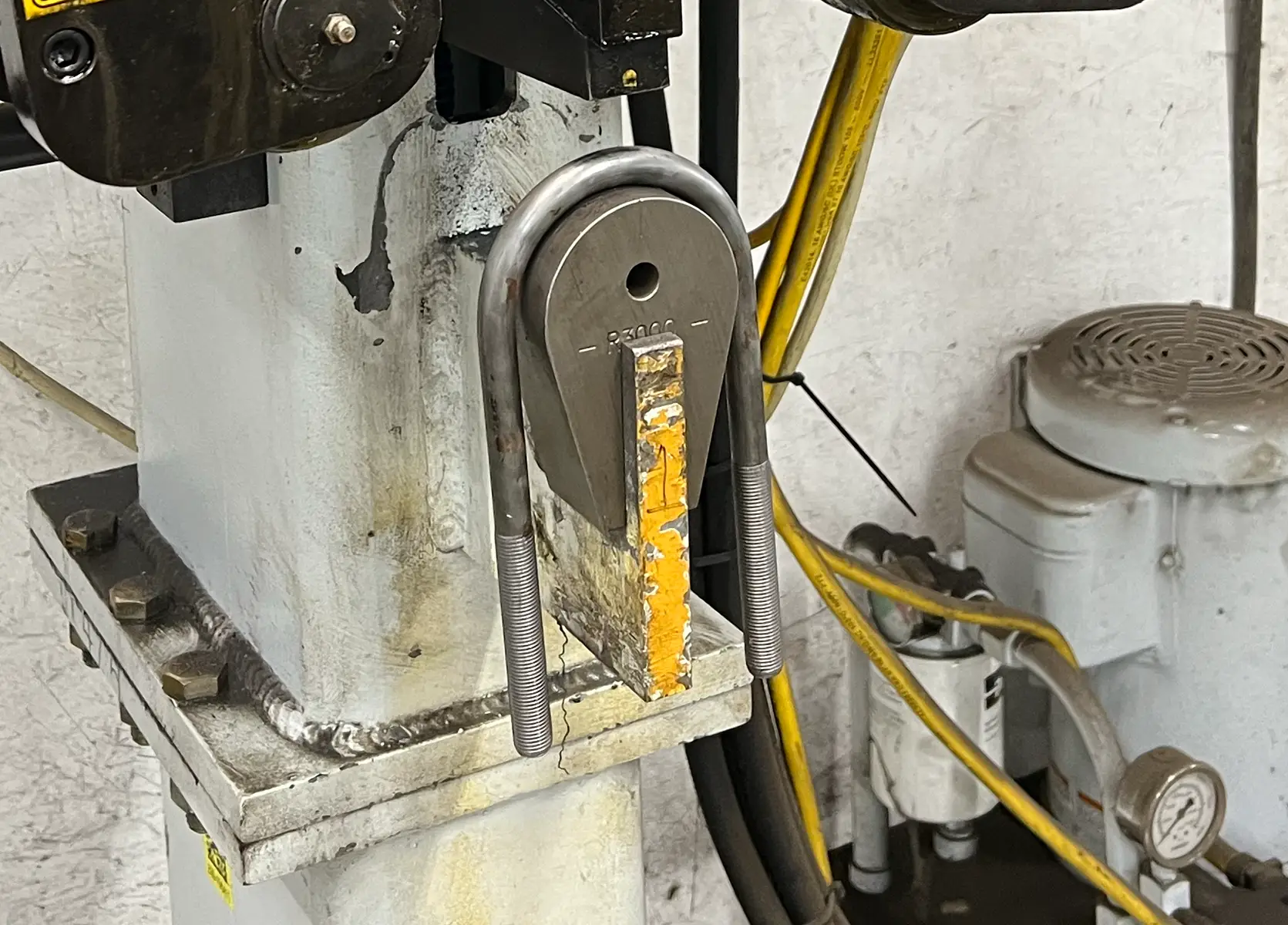
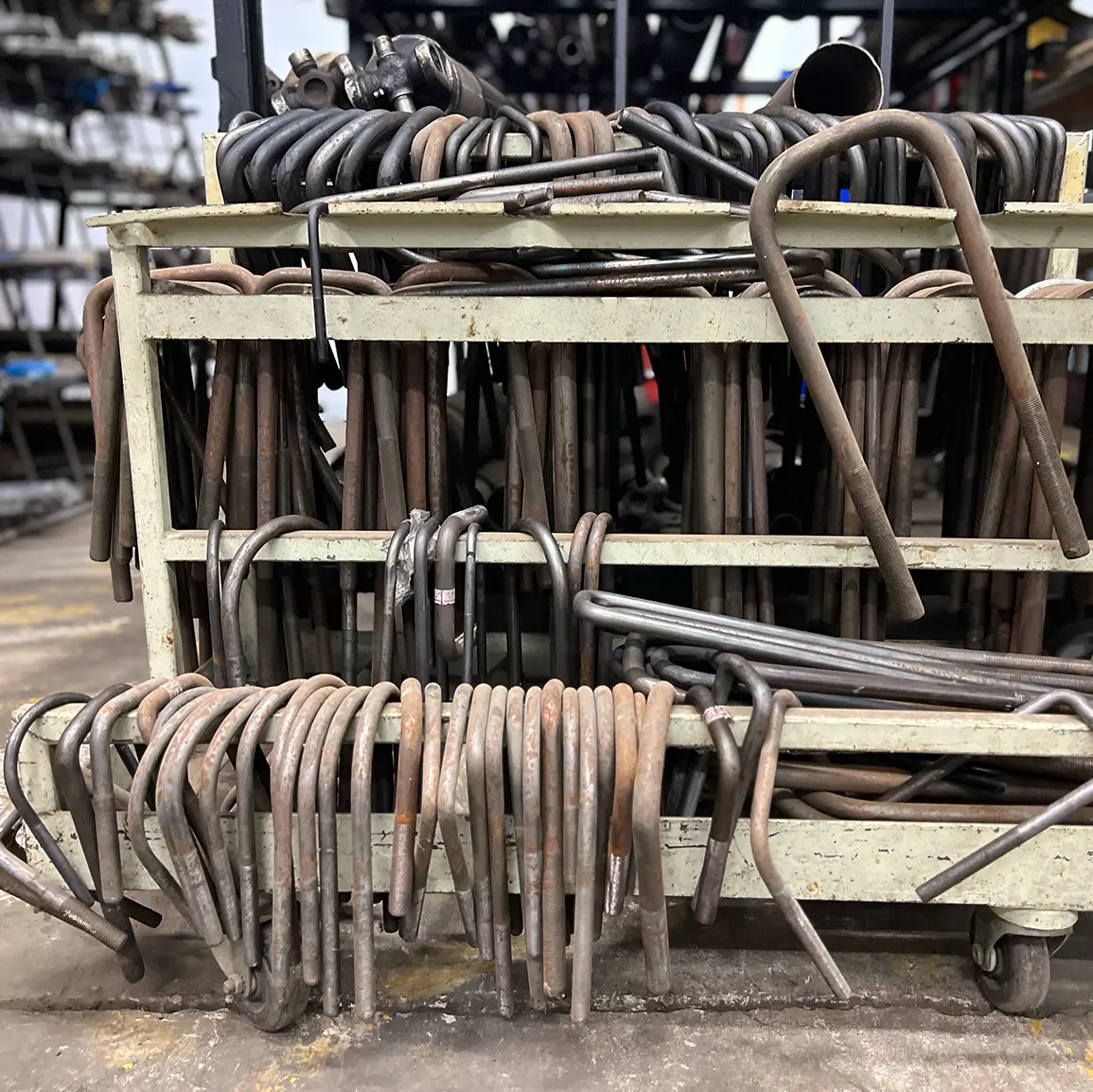
Yes. We offer custom U-bolt bending in Eugene and can produce U-bolts in different lengths, widths, thread sizes, and thicknesses. We can bend both round and square U-bolts depending on the application.
What truck repair services does Anderson Brothers Truck & Equipment offer?
We perform repair and maintenance work for medium- and heavy-duty trucks, including flywheel resurfacing, oil changes, brake services, suspension repair, and king pin replacement. We work to reduce downtime and keep trucks performing at their best.
What truck brands does Anderson Brothers Truck & Equipment service and supply parts for?
Anderson Brothers says it services and supplies parts for major truck and equipment brands including Freightliner, Kenworth, Peterbilt, Mack, Volvo, and Cummins, among others.
Who owns Anderson Brothers Truck & Equipment?
Anderson Brothers is now led by the Weld Family, who also own Buck’s Sanitary Services and Royal Flush Environmental Services. The current ownership remains focused on serving Eugene and the surrounding community.
Where is Anderson Brothers Truck & Equipment located?
The Anderson Brothers Truck & Equipment is conveniently located at 2640 State Hwy 99 N #1, Eugene, OR 97402. You can easily find directions on Google Maps or call at (541) 688-8686 Monday through Friday 7:30am to 6:00pm, Saturday 8:00am to 2:00pm. Closed Sundays.
How can I contact Anderson Brothers Truck & Equipment?
You can contact Anderson Brothers Truck & Equipment by phone at: (541) 688-8686, visit their website at https://andersonbrotherste.com/ or connect on social media via Facebook or Instagram
Fans attending events at Autzen Stadium can find nearby professionals offering Drivelines services, Custom U Bolts manufacturing, and heavy-duty Truck Parts.